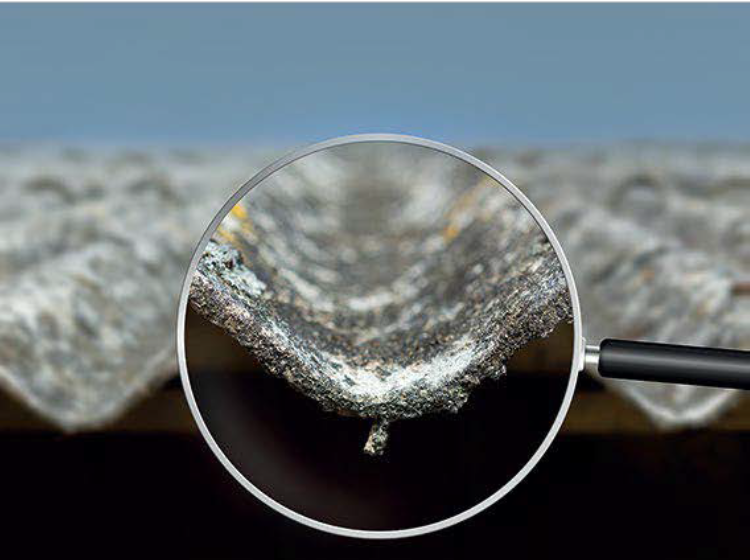
Asbestos is one of the most dangerous legacies of 20th-century construction. Valued for decades for its strength and fire resistance, it was built into countless buildings, and much of it is still there today, hidden in roofs, insulation and cement products. One of the most common examples in Greece is asbestos cement roof sheets (elenit), the corrugated sheeting widely used on roofs and outbuildings for decades. However, asbestos is also found in industrial facilities, power plants and ships.
For any organization responsible for an older building or industrial facility, professional asbestos management and removal is both a legal obligation and a duty of care. This guide explains what asbestos is, how it is surveyed and safely removed, and what responsible disposal and compliance involve. Asbestos is a Category 1A carcinogen still present in many older buildings and industrial installations.
- Always start with a professional asbestos survey and laboratory analysis. Never disturb or remove suspect material yourself.
- Asbestos cement roof sheets (elenit) are among the most common asbestos-containing materials found in Greek buildings.
- The two main asbestos abatement options are removal and encapsulation. Removal eliminates asbestos-containing materials, while encapsulation seals or covers them to prevent fiber release but requires ongoing monitoring.
- Safe asbestos removal involves appropriate containment measures, dust suppression, protective equipment, secure packaging, disposal as hazardous waste and monitoring according to the type of material and the specific project requirements.
Use only appropriately licensed and certified providers.
What Is Asbestos and Why It Is So Dangerous
Asbestos is a group of six naturally occurring mineral fibers that can be separated into thin, durable threads. These fibers resist heat, fire and chemicals, which is why asbestos was widely used to reinforce cement and other building materials throughout much of the last century. The most common form still found in buildings is chrysotile, or white asbestos. In Greece, asbestos cement roof sheets, commonly known as elenit, were widely used on roofs, sheds and outbuildings until the ban. Beyond asbestos cement, the material was also extensively used in thermal insulation, pipe lagging, boilers and other industrial and maritime applications.
The danger comes from those same fibers. When asbestos-containing materials are cut, broken, disturbed or left to degrade, microscopic fibers can become airborne and be inhaled deep into the lungs. Over years or decades, this exposure can cause asbestosis, lung cancer and mesothelioma. For this reason, asbestos is classified as a Category 1A carcinogen.
Friable asbestos presents particular challenges because it can be easily crumbled or reduced to powder, increasing the potential for airborne fiber release when disturbed. It is commonly encountered in older industrial installations, power generation facilities and ships, where specialized removal procedures and containment measures are essential.
According to the World Health Organization (WHO), occupational exposure to asbestos causes an estimated 200,000 or more deaths worldwide each year, accounting for over 70% of all work-related cancer deaths. Greece banned asbestos entirely in 2005, but the material left in older buildings and infrastructure still requires careful handling.
Identifying the Risk: The Asbestos Survey
Asbestos cannot be reliably identified by sight alone, so the first step in any project is a professional asbestos survey. A trained surveyor inspects the building or facility, locates suspect materials and takes samples for laboratory analysis to confirm their composition.
Asbestos was used in a wide range of products, including pipe lagging, floor and ceiling tiles, textured coatings, insulation boards, thermal insulation in industrial equipment and ships, and asbestos cement roof sheets (elenit).
Material in good, undisturbed condition generally presents a lower risk, such as intact asbestos cement roofing, while damaged or friable material that crumbles easily is far more hazardous.
The survey results in a risk-based plan that determines the next steps and forms the foundation of safe asbestos management. In industrial and maritime environments, the assessment must also account for complex installations, accessibility and the potential impact of removal activities on surrounding operations.
Abatement Options: Removal and Encapsulation
There are two main approaches to asbestos abatement.
The first is removal, which involves the controlled extraction of asbestos-containing materials and their subsequent management as hazardous waste. It is generally the preferred solution when materials are damaged, friable or likely to be disturbed during renovation, demolition or industrial maintenance activities.
The second is encapsulation.Although encapsulation can be quicker and less costly than removal, it is not always the preferred long-term solution because the asbestos remains in place and the materials must be regularly monitored over time. Its suitability depends on the condition of the material and the specific circumstances of the site.
Polyeco specializes in the safe removal and management of asbestos-containing materials, including asbestos cement products and friable asbestos, found in industrial facilities, power plants, ships and other complex environments.
The Asbestos Cement Roof Sheets (Elenit) Removal Process
Asbestos cement roof sheets (elenit) were a standard roofing material in Greek buildings for decades, so their removal is one of the most common asbestos management projects undertaken by Polyeco.
The work follows a strict, multi-stage procedure.
- Planning and permits: The work is planned in advance, including the necessary notifications, documentation and permits in accordance with applicable requirements. [VERIFY: Greek legal requirements and work plan].
- Controlled work area: The work zone is clearly marked and access is restricted. Appropriate protective and containment measures are implemented according to the site conditions. [VERIFY WITH TECHNICAL TEAM].
- Protective equipment: Workers use appropriate respiratory protective equipment and protective clothing.
- Careful removal: Asbestos cement sheets are wetted, where appropriate, to suppress dust and removed intact wherever possible to minimize fiber release.
- Packaging for transport: Removed materials are securely wrapped or packaged, appropriately labeled and prepared for safe transportation to an authorized disposal facility. [VERIFY: wrapping/palletizing vs. double-bagging].
- Cleaning and monitoring: The work area undergoes appropriate cleaning procedures, using specialized equipment such as HEPA-filtered vacuums, followed by the necessary inspections and monitoring. [VERIFY: air monitoring and clearance requirements by project type].
Every step is designed to minimize asbestos fiber exposure for workers, occupants and surrounding communities.
For friable asbestos removal in industrial facilities, power plants and ships, additional containment and control measures may be required due to the greater potential for fiber release. These projects demand specialized expertise and carefully planned procedures adapted to the operational environment.
Asbestos Disposal
Removed asbestos cement roof sheets (elenit), friable asbestos and other asbestos-containing waste must be managed as hazardous waste, making safe transportation and disposal essential.
Following removal, asbestos-containing waste is appropriately packaged, documented and transported to facilities authorized to accept the relevant waste streams, in accordance with applicable regulations. [SOURCE / TECHNICAL VERIFICATION REQUIRED].
Emerging technologies can also destroy asbestos fibers through thermal, chemical or mechanical treatment processes, converting asbestos-containing materials into non-hazardous products that may have potential applications in construction or other industries.
Although these methods are not yet widely available, certain technologies offer the potential to permanently eliminate the hazardous fibrous structure of asbestos and reduce reliance on conventional disposal.
Responsible waste management completes the safe asbestos removal process.
Selection of a Licensed Asbestos Removal Contractor and Key Cost Factors
Never attempt asbestos removal yourself. Look for an appropriately licensed and certified provider with proven experience in handling different asbestos-containing materials, the necessary containment capabilities and transparent reporting procedures.
The cost of asbestos removal depends on the size of the project, the type and quantity of material, access and height, the containment required and the distance to the disposal site. More complex projects may require extensive safety measures and specialized procedures, significantly influencing overall costs.
Set against the health, legal and reputational risks of improper handling, professional removal is an investment in safety, not just compliance.
With more than 20 years of experience in asbestos removal and management, Polyeco has handled over 5,685 tons of asbestos-containing materials, undertaking projects ranging from asbestos cement roofing to complex industrial and maritime applications.
Its expertise is supported by membership in ARCA (Asbestos Removal Contractors Association), while its certified services comply with more than 14 internationally recognized standards and certifications.
Contact Polyeco to discuss your asbestos removal requirements and request a tailored quote.